UN warns global temperatures could rise by 2.8°C by 2100
Iraq clears nearly 298 million square meters of mine-contaminated land
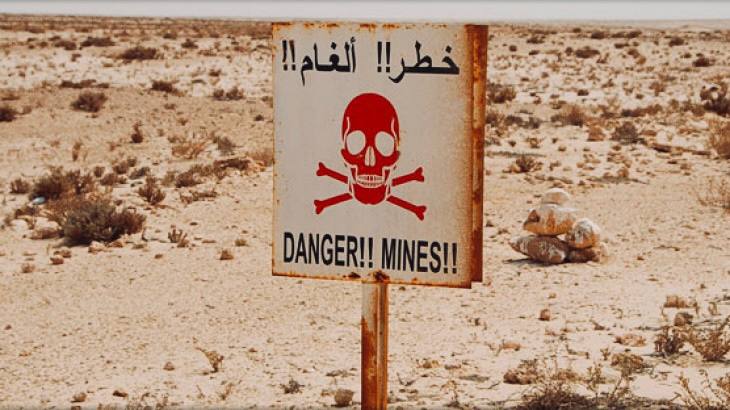
Iraq has cleared nearly 298 million square meters of land contaminated by mines and explosive remnants of war over the past three years, but more than 2.7 billion square meters remain hazardous, according to the country’s Directorate of Mine Action.
Ihsan Jaafar Ahmed, the director general of the Directorate of Mine Action at the Ministry of Environment, said Sunday that 297,647,761 square meters were cleared between 2023 and 2025.
Basra is Iraq’s most heavily contaminated governorate, with more than 1,000 square kilometers affected, followed by Anbar, Babylon, Diyala, Al-Muthanna, Dhi Qar, Maysan, Wasit, Nineveh, Al-Qadisiyah, Kirkuk, Baghdad, Salah Al-Din, Najaf and Karbala.
Ahmed said contaminated areas in Halabja and Sulaymaniyah, covering nearly 200 square kilometers, fall under the jurisdiction of the General Directorate of Mine Affairs in the Kurdistan Region.
282 Mine Victims Recorded
Mines and explosive remnants killed or injured 282 people in 2024 and 2025, including 97 fatalities and 185 injuries, Ahmed said. Children aged 12 and younger accounted for 13.3% of the casualties.
Authorities have also conducted 43,397 mine-risk awareness campaigns, seminars and media activities, reaching more than 4.5 million people in affected communities.
Clearance Obligations
Under Iraq’s transparency report to the Ottawa Convention, areas contaminated by anti-personnel mines total 1.48 billion square meters. About 388.5 million square meters have been cleared, representing 26.21% of the contaminated area.
Contamination from improvised explosive devices (IEDs) covers another 1.50 billion square meters, of which approximately 993.4 million square meters have been cleared, a rate of 66.03%.
Iraq joined the Ottawa Convention banning anti-personnel mines in 2007 and secured an extension until 2028 to complete its clearance obligations. Ahmed said authorities are preparing a new extension request, with an initial draft expected to be submitted on April 1, 2027.
Funding Remains a Major Challenge
Mine clearance typically begins with non-technical and technical surveys to identify and assess hazardous areas, followed by clearance, quality control and the release of land for civilian use.
Ahmed said the effort faces significant challenges, including the vast scale of contamination, the loss of minefield maps from the former Iraqi army, the displacement of mines by floods and torrents, and inadequate funding.
He said no humanitarian funding was allocated to the directorate for 2023–2026, with the available budget covering only operational expenses.
The contamination continues to affect major development projects, including oil fields, power infrastructure, agricultural land, roads and water resources. Authorities say clearing mines and explosive remnants is therefore critical to returning affected land to productive civilian and economic use.
Latest News