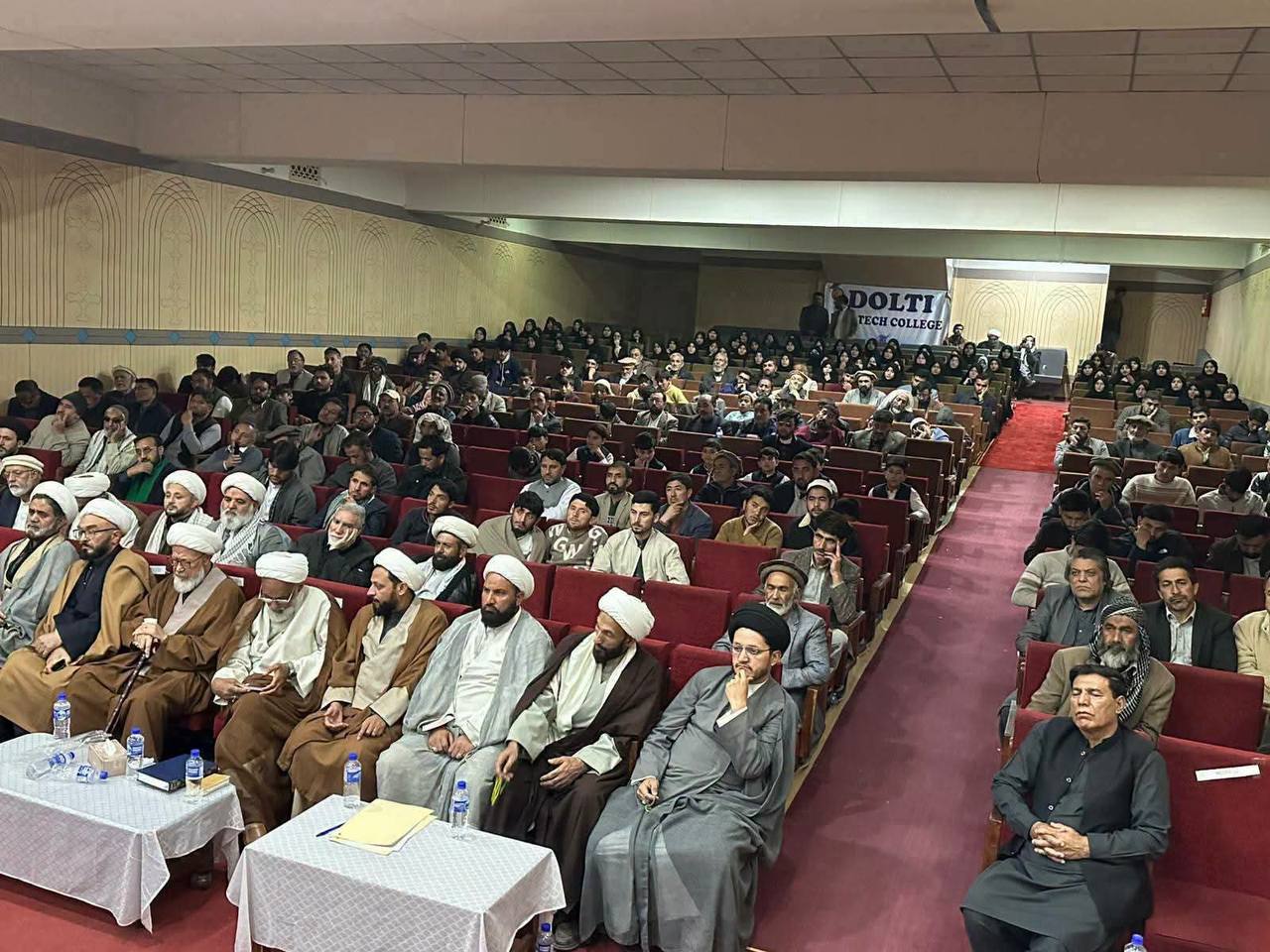
Pakistan: First Nahj Al-Balagha Conference held in Baltistan
Lessons in Steadfastness: The Shia of the Ahlulbayt as a Model
By: Haidar Al-Mangooshi
The highest human values often emerge most clearly in times of hardship and trial. Throughout history, the school of the Ahlulbayt (peace be upon them)—and the followers who remained faithful to their path—has stood as a profound example of steadfastness, transforming endurance into both a way of life and a lasting mission.
Lesson One: Steadfastness Rooted in Faith and Vision
True steadfastness is not merely a product of material strength, but of deep faith and clarity of purpose. When Imam Hussain stood in Karbala with only a small group of family members and companions, he faced overwhelming forces without the advantage of numbers or weaponry. Yet he possessed unwavering conviction: that dying for truth is honor, while living under injustice is humiliation.
This principle echoed through history. Mukhtar Al-Thaqafi rose not for personal revenge, but to uphold justice and accountability. Likewise, the movement of Tawwabun, led by Sulayman ibn Surad Al-Khuza'i, embodied the belief that the sacrifice of Hussain could never be in vain.
Lesson Two: Transforming Pain into Living Culture
One of the defining strengths of the followers of the Ahlulbayt has been their ability to transform suffering into a source of renewal and awareness. Mourning gatherings (Majalis Al-Aza’) evolved beyond expressions of grief into platforms for education, reflection, and moral awakening.
Even under repression—particularly during the Abbasid Caliphate—these traditions endured. When public observance was forbidden, they adapted; when permitted under rulers such as Al-Ma'mun, they flourished. During the Buyid dynasty, they became institutionalized as part of public life.
In this way, the tragedy of Karbala was transformed into a continuous source of ethical, social, and political guidance.
Lesson Three: Sacrifice for Future Generations
The legacy of Karbala teaches that meaningful struggle is not confined to immediate outcomes. Imam Hussain’s sacrifice was not for short-term victory, but for a timeless principle—one that would inspire generations.
Though Mukhtar’s rule was brief, and the Tawwabun met martyrdom in their confrontation with Ubayd Allah ibn Ziyad, their movements shaped the moral consciousness of those who followed. Across centuries, the Shia endured persecution with the understanding that they were planting seeds for the future.
Their enduring message reflects this vision: that dignity must outlive oppression, and that sacrifice can illuminate the path for generations yet to come.
Lesson Four: Adaptation Without Compromise
Another enduring lesson is the ability to adapt to changing circumstances without abandoning core principles. Across different historical periods, expressions of devotion evolved in response to political realities:
· Under harsh Abbasid rule, especially during the reign of Al-Mutawakkil, rituals were observed in secrecy.
· During more tolerant periods, such as under Al-Ma'mun, they re-emerged publicly.
· Under the Buyids, commemorations became widespread public expressions.
· In the era of the Safavid dynasty, these traditions expanded further with full institutional support.
Despite these shifts, the core remained unchanged: devotion to the Ahlulbayt, remembrance of Ashura, and rejection of injustice.
Lesson Five: Unity Amid Diversity
Despite differences in thought and practice, the followers of the Ahlulbayt have consistently united around shared principles—love for the Ahlulbayt and the commemoration of Ashura. This unity, grounded in shared values rather than uniformity, has been a cornerstone of their resilience.
Lesson Six: Collective Patience and Social Solidarity
Steadfastness has also taken the form of collective endurance. The Shia tradition emphasizes “collective patience,” recognizing that challenges are best met through unity and cooperation.
Institutions such as Hussainiyahs became centers of social and emotional support. Communal meals during Muharram served the needy, while processions and mawkibs reflected organized, collective action. In times when state structures were hostile, these community networks formed a resilient social foundation.
Lesson Seven: Drawing from the Past to Build the Future
Perhaps the most remarkable lesson is the ability to draw inspiration from history without becoming confined by it. For the followers of the Ahlulbayt, Karbala is not merely a past event, but a living source of guidance.
Each commemoration of Ashura renews its meaning, offering lessons relevant to contemporary struggles. This dynamic relationship with history has enabled them to remain at the forefront of movements resisting injustice—not by imitating the past, but by embodying its principles.
Conclusion
The enduring lesson is clear: true struggle is not for immediate triumph, but for principles that outlast time. The past is not a prison, but a school—one that teaches resilience, purpose, and vision.
In a world marked by conflict and uncertainty, the school of the Ahlulbayt continues to stand as a beacon of steadfastness, offering guidance to all who seek to endure hardship without surrendering their values.