هدر الطعام خسائر تكفي لإطعام مئات الملايين
Religious seminary scholar: The fatwa of Sufficient Defense saved Iraq and established the foundations of a civilizational and humanitarian project
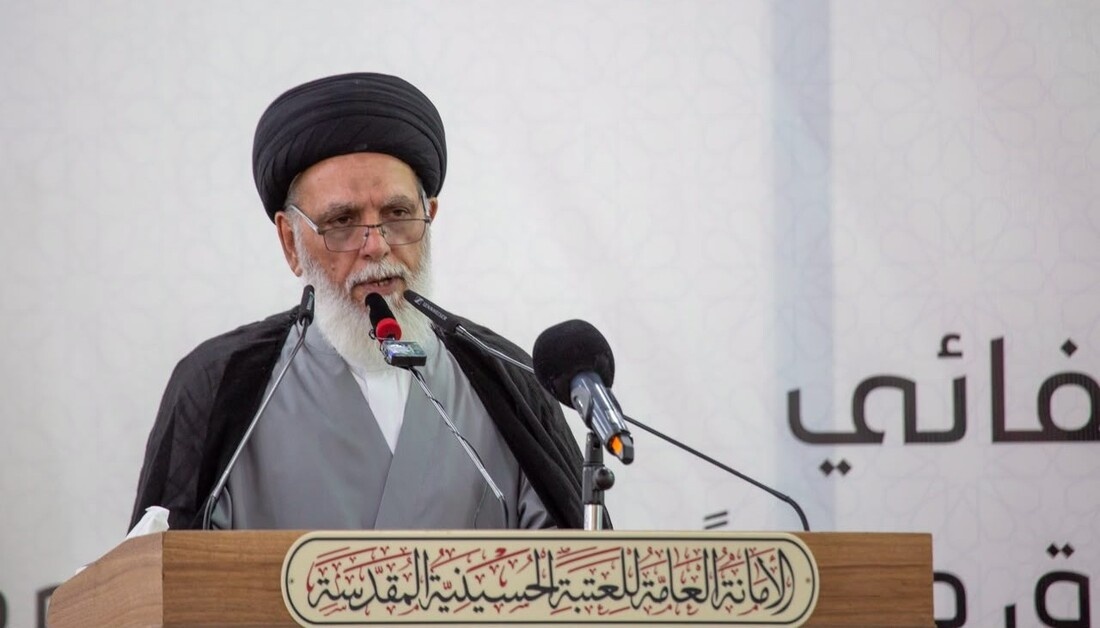
Religious seminary scholar Sayed Ahmed Al-Ashkouri affirmed that the Fatwa of Sufficient Defense, issued by the Supreme Religious Authority, Grand Ayatollah Ali Al-Hussaini Al-Sistani, was far more than an emergency response to a security crisis. Rather, he described it as a historic and intellectual turning point that reflected the deep relationship between the nation and its religious leadership, contributing to the protection of Iraq and humanity from the threat posed by extremist Takfiri ideology.
Al-Ashkouri made the remarks during the opening ceremony of the third public festival commemorating the Sacred Defense Fatwa, organized by the Imam Hussain Holy Shrine within its sacred courtyard. The event was attended by Sheikh Abdul-Mahdi Al-Karbalaey, representative of the Supreme Religious Authority, as well as religious scholars, academics, and prominent cultural figures.
In his address, Al-Ashkouri stated that the fatwa evolved beyond a religious decree into a comprehensive civilizational project grounded in moral and humanitarian values. He argued that it played a vital role in preserving social cohesion and protecting society from the dangers of collapse and fragmentation during one of the most critical periods in Iraq’s contemporary history.
He noted that the religious authority demonstrated exceptional jurisprudential foresight at a decisive moment, helping restore national balance and reinvigorate a sense of collective responsibility, duty, and commitment among Iraqis.
According to Al-Ashkouri, the fatwa was firmly rooted in established religious and jurisprudential principles and was never directed against any particular sect or community. Instead, it sought to defend all Iraqis regardless of their religious, ethnic, or social backgrounds. He stressed that claims portraying the fatwa as sectarian or politically motivated are inconsistent with both the content of the religious authority’s statements and its longstanding support for state institutions and the rule of law.
He further highlighted what he described as the fatwa’s most significant strategic achievements, including the protection of holy sites, the containment of extremist ideology, the prevention of partition and external threats, and the promotion of values such as awareness, insight, and faith that contributed to Iraq’s eventual victory over terrorism.
Al-Ashkouri also emphasized the importance of moving beyond merely documenting the sacrifices and achievements associated with the Sacred Defense. He called for the institutionalization of the fatwa’s principles through educational, cultural, and intellectual initiatives aimed at preserving historical memory and safeguarding future generations from ideological extremism and the distortion of historical facts.
Concluding his remarks, Al-Ashkouri paid tribute to the martyrs who responded to the fatwa, praising the role of the Supreme Religious Authority and the Imam Hussain Holy Shrine in preserving the legacy of what he described as a national and humanitarian milestone. He stressed the importance of continuing to honor the sacrifices made in defense of Iraq and its people.
آخر ما تم نشره