Secretary-General of the Imam Hussain Holy Shrine: Forum of Holy Shrine Secretaries-General serves as a beacon for reform and community service
Ramadan 2026: Which countries will see the longest and shortest fasting hours?
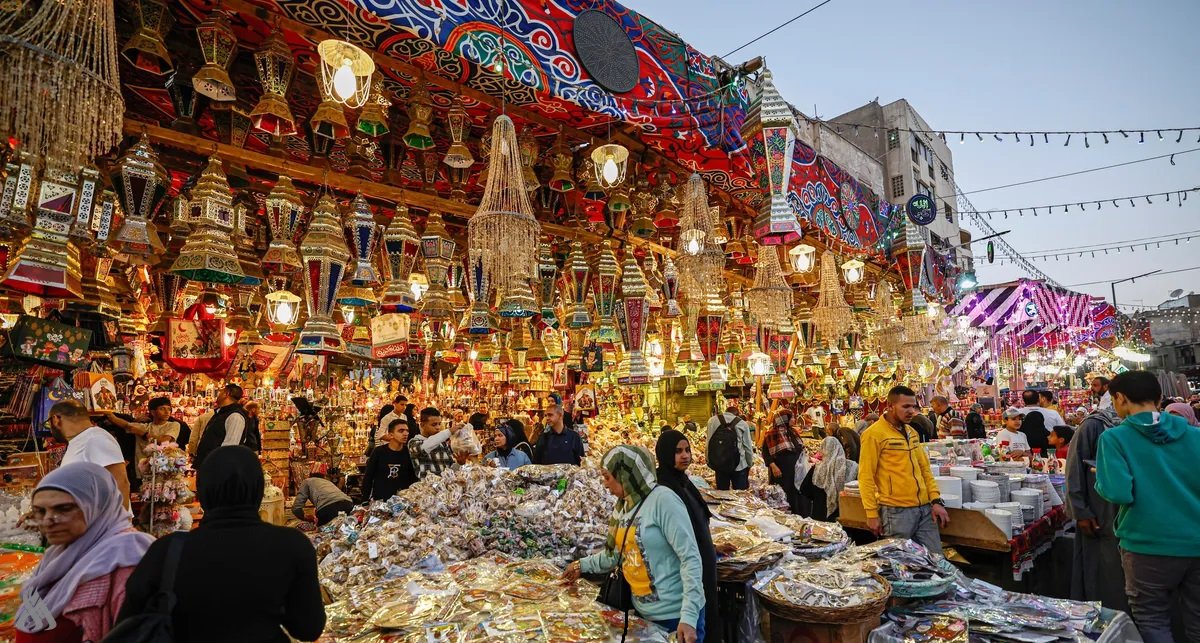
More than a billion Muslims worldwide are preparing for Ramadan 2026. Astronomical projections indicate that fasting hours in many regions will be slightly shorter than last year, offering relative ease for observers in several countries.
Fasting hours vary by geography
The length of the fast differs from one country to another depending on latitude and geographical position. Muslims abstain from food and drink from dawn (Fajr) until sunset (Maghrib), and the duration is determined by local sunrise and sunset times.
In much of the Middle East and North Africa, fasting hours remain moderate due to proximity to the equator. As one moves farther north, daylight hours become longer during this season, increasing fasting duration. Conversely, countries in the Southern Hemisphere experience shorter days and therefore shorter fasting periods.
In the United Arab Emirates, the first day of Ramadan is expected to last around 12 hours and 46 minutes—approximately 30 minutes shorter than the first day of Ramadan last year, which exceeded 13 hours. Fasting time will gradually increase as the month progresses.
Countries with the longest fasts
Northern regions experience the most extended fasting hours. Parts of Russia, Greenland, and Iceland witness particularly long daylight hours.
Similarly, countries such as Norway, Sweden, and Finland often record fasting days exceeding 16 hours. In some northern parts of Canada, fasting can approach 20 hours due to exceptionally long daylight periods.
Jurisprudential flexibility
Islamic scholars have addressed the challenge of unusually long fasting days. In extreme cases, Muslims may follow the fasting timetable of Mecca or adopt the schedule of the nearest city with moderate daylight hours to ensure reasonable observance.
Countries with the shortest fasts
By contrast, nations closer to the equator or located in the Southern Hemisphere experience shorter fasting days. Countries such as Brazil, Argentina, Uruguay, South Africa, Chile, and New Zealand typically see fasting periods ranging between 11 and 13 hours.
In tropical regions such as Indonesia, Malaysia, and Kenya, daylight hours remain relatively stable year-round, resulting in fasting durations of approximately 12 to 14 hours.
Despite the variation between the longest northern days and the shortest southern ones, Ramadan remains a unifying spiritual season, bringing Muslims together in devotion regardless of geography or fasting length.
Ebrahim Al-Owainy