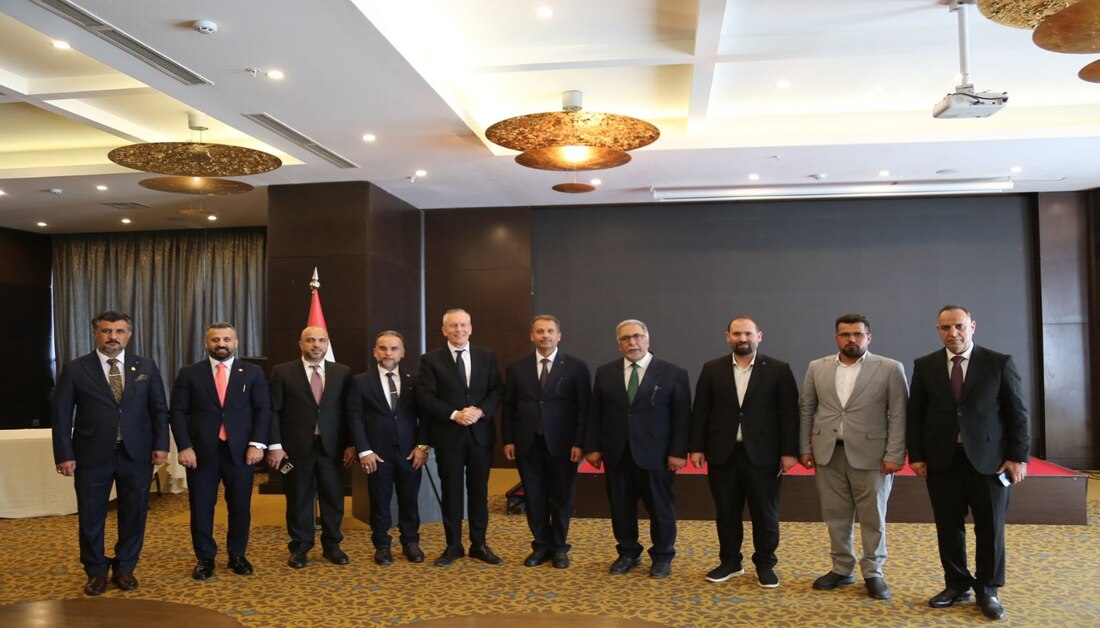
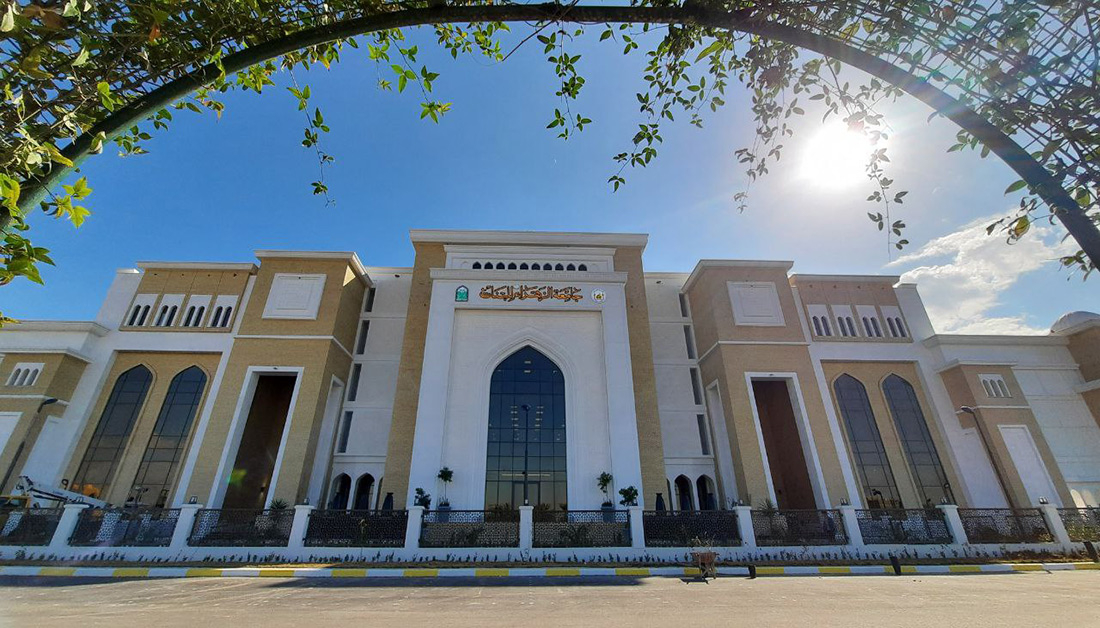
Vatican Ambassador to Iraq meets with representative of the Supreme Religious Authority in Karbala
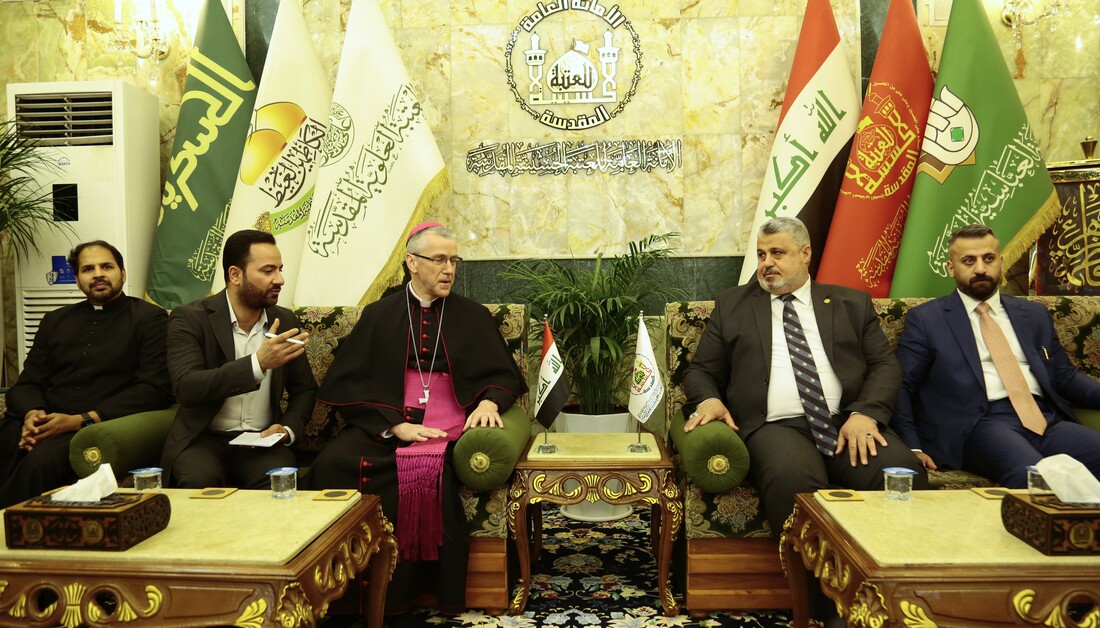
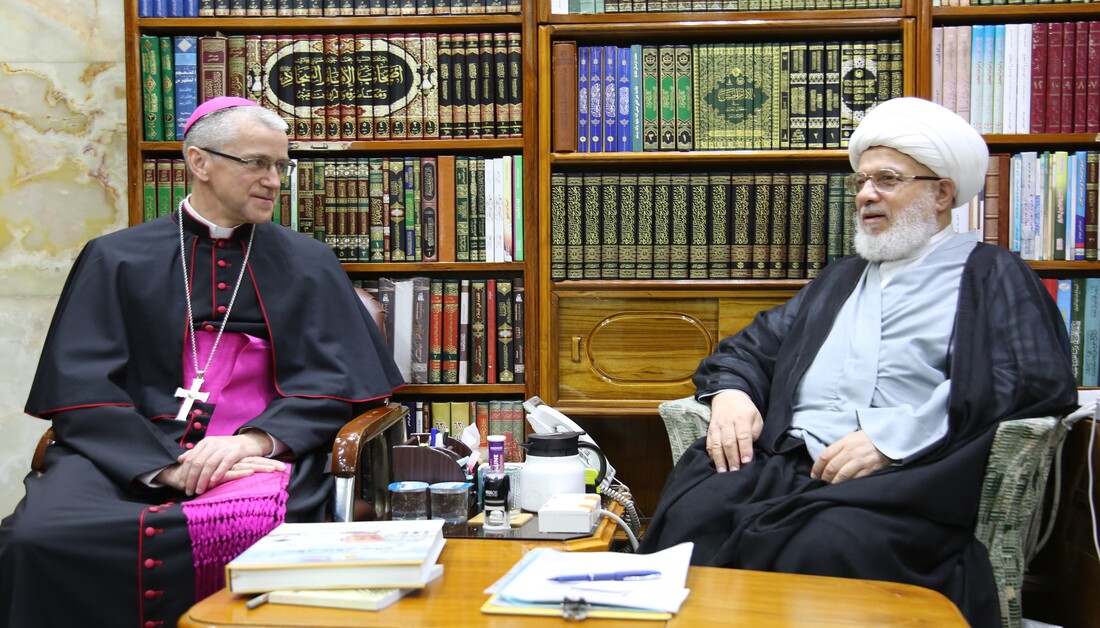
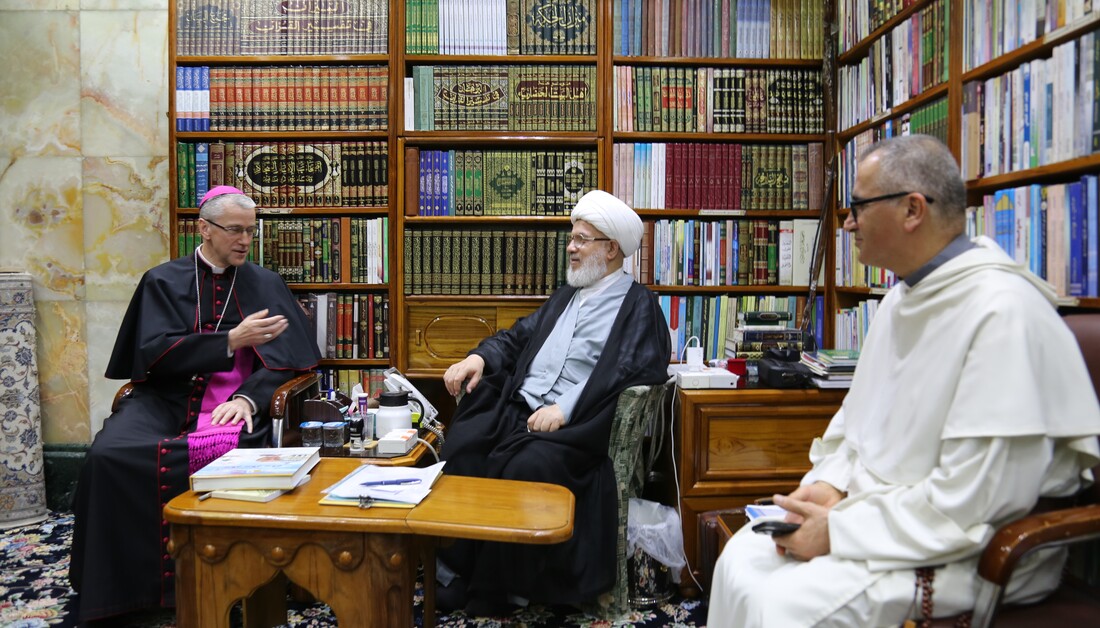
His Eminence Sheikh Abdul-Mahdi Al-Karbalaey, representative of the Supreme Religious Authority in Karbala, received Archbishop Mirosław Stanisław Wachowski, Vatican Ambassador to Iraq, at his office. The meeting focused on the role of religious institutions in promoting peace, love, and coexistence, as well as providing humanitarian assistance to all segments of Iraqi society.
During the meeting, Sheikh Al-Karbalaey outlined the key services and humanitarian initiatives undertaken by the Holy Shrine of Imam Hussain to support all components of Iraqi society, without discrimination based on religious or doctrinal affiliation. He emphasized the vital role of religious institutions and clergy in upholding the authentic principles of the Abrahamic faiths and strengthening people's spiritual connection with God, noting that this connection can have a positive impact on their lives and society as a whole.
He stressed that the responsibility of religious institutions extends beyond guiding people in matters of worship; it also includes listening to their problems and concerns and working to find appropriate solutions. He explained that, just as people need religious guidance, they also need someone who will hear their suffering, understand their circumstances, and help ease their burdens.
Sheikh Al-Karbalaey further highlighted the Holy Shrine of Imam Hussain's commitment to a range of humanitarian initiatives, including education, healthcare, and support for those seeking to marry. These efforts reflect the Shrine's vision of addressing society's needs, improving people's living conditions, and strengthening social solidarity.
For his part, Archbishop Wachowski expressed his gratitude for the opportunity to meet with the representative of the Supreme Religious Authority. He praised the guidance and assistance provided by the religious authority and the holy shrines to the people of Iraq, noting that these initiatives embody the values of peace, love, and solidarity promoted by the Abrahamic religions.
He also emphasized that the humanitarian principles upheld by religious institutions should be reflected in the actions of governments, politicians, and those responsible for managing public affairs. He called for these experiences and humanitarian initiatives to serve as models for improving public services, meeting citizens' needs, and advancing the common good.
Attachments
Latest News