Masouma: A young cancer patient who turns Warith’s corridors into a school of dreams
The repercussions of the war on the American public
This report examines the wide-ranging impact of the ongoing war on American society—from mounting economic pressures, including rising inflation and declining consumer confidence, to deepening political and social divisions.
Public sentiment in the United States has shifted markedly just weeks into the conflict with Iran. Contrary to the typical surge in national unity seen at the outset of war, the U.S. administration is facing widespread protests and falling approval ratings. This backlash is driven by rising fuel costs, weakening economic confidence, and growing fears of being drawn into a prolonged conflict similar to those in Iraq and Afghanistan.
Public Backlash: Nationwide Protests
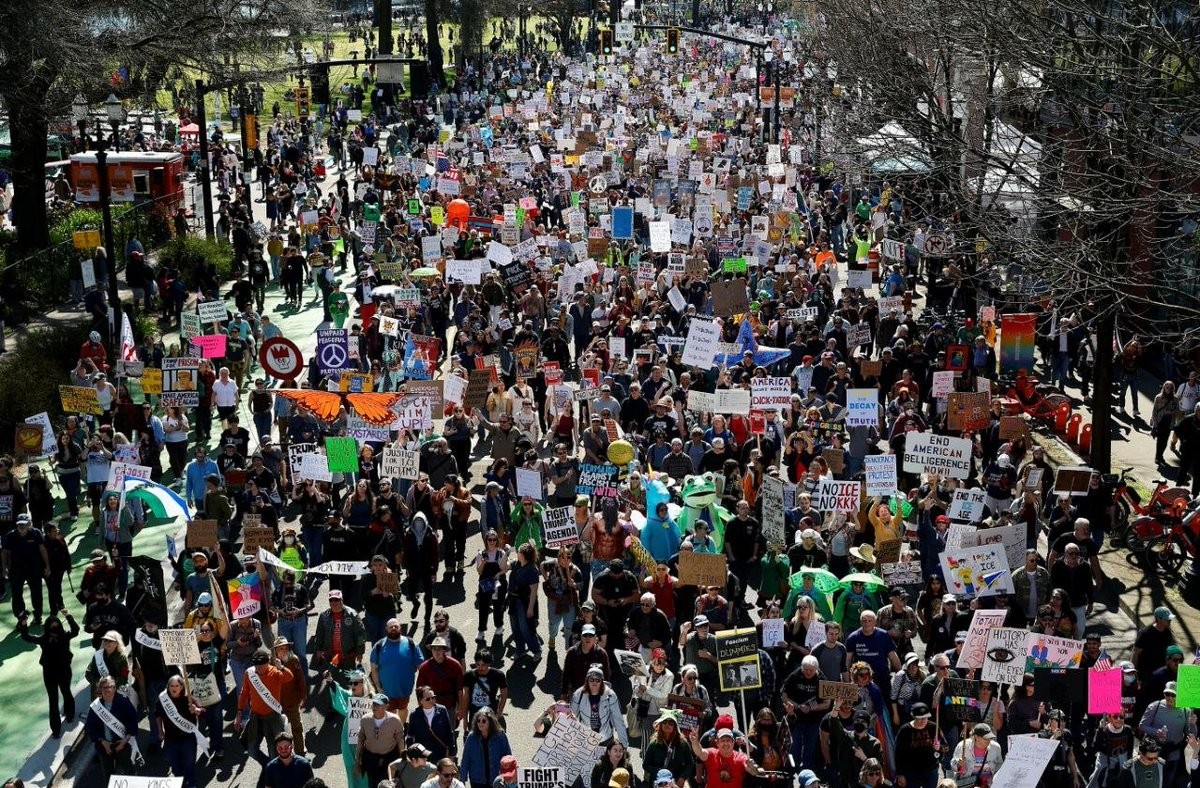
More than 50 U.S. cities—including New York, San Francisco, Los Angeles, Chicago, and Washington, D.C.—have witnessed large-scale demonstrations opposing the war. Protesters carried signs reading “Stop the War on Iran” and “Don’t Intervene in Iran,” reflecting a growing anti-war sentiment.
A Deepening Divide in Public Opinion
Recent polling highlights a clear shift in attitudes:
43% of Americans oppose the war, compared to 27% who support it
Disapproval of President Donald Trump’s handling of the crisis exceeds 60%
A majority now view the decision to go to war as a mistake
Opposition is particularly strong among independent voters, a key bloc in determining election outcomes.
Economic Strain: Rising Costs and Inflation Fears
The most immediate impact has been felt at the pump:
Gas prices have risen sharply, from around $2.90 to nearly $4 per gallon
Global oil prices have surged significantly, driving broader cost increases
Economists warn that prolonged conflict could worsen inflation and place additional strain on household finances. Concerns about a return to “stagflation”—high inflation coupled with weak economic growth—are also emerging.
Fears of Escalation and Military Draft
Concerns about deeper U.S. involvement are growing. While officials have not confirmed plans for a military draft, they have not ruled it out entirely, fueling anxiety among American families. Lawmakers and citizens alike have expressed strong opposition to the deployment of ground troops in Iran.
A Divided Society
The war is intensifying existing divisions within American society. Younger generations, particularly in university towns, are at the forefront of protests. Meanwhile, Muslim and Iranian-American communities face heightened anxiety, navigating both opposition to the war and concerns about discrimination at home.
Political Fallout
The conflict is already reshaping the political landscape. Declining approval ratings and rising public dissatisfaction pose challenges for the administration, particularly with midterm elections approaching. The war risks becoming a defining domestic issue with significant electoral consequences.
Echoes of Past Wars
Memories of Iraq and Afghanistan loom large, contributing to what analysts describe as “war fatigue.” Many Americans remain wary of entering another prolonged and costly conflict in the Middle East.
America at a Crossroads
The United States now faces a complex reality: a war with limited public support, economic uncertainty, and deep internal divisions. The consequences extend beyond rising prices, touching on public trust, political stability, and social cohesion.
As the conflict continues, a critical question remains: can the United States navigate this crisis without further fracturing its social and political fabric?
Haidar Al-Mangooshi