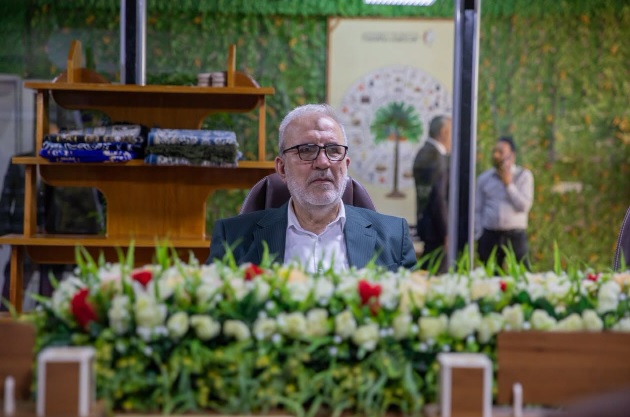
Secretary-General of the Imam Hussain Holy Shrine: Forum of Holy Shrine Secretaries-General serves as a beacon for reform and community service
The Cultural Heart of Baghdad and a Workshop of Crafts Rooted in Paper Memory
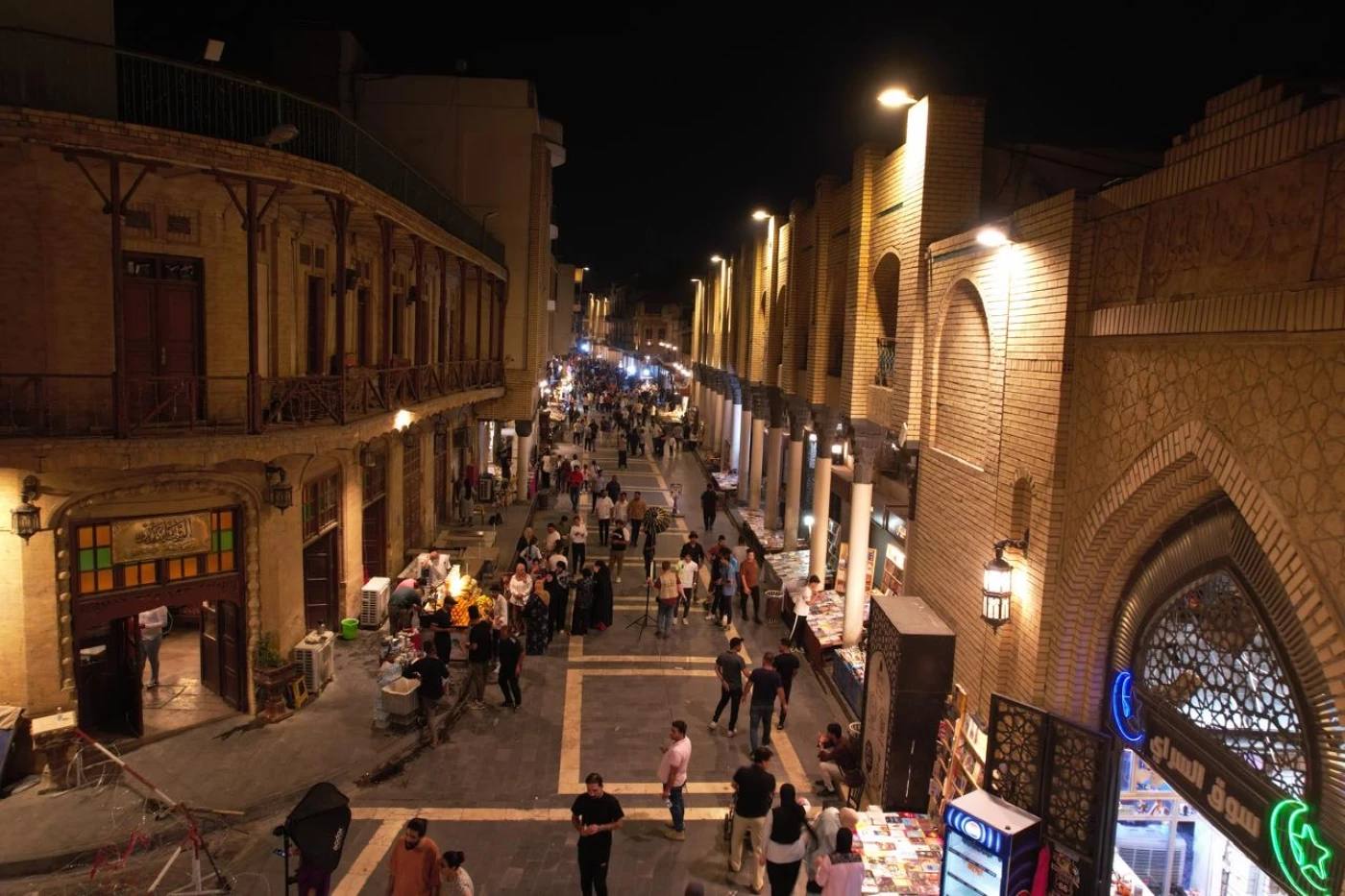
Located in the heart of Baghdad, Al-Mutanabbi Street is far more than a traditional book market. It is an open cultural space whose narrow alleyways preserve Iraq’s intellectual memory. Its shops and modest workshops function as a living laboratory for the production, restoration, and preservation of books—at a time when the bond with paper is steadily weakening in favor of digital media.
Since its establishment in the early twentieth century, Al-Mutanabbi Street has been synonymous with culture, books, and knowledge, standing as a permanent landmark in Iraq’s cultural landscape. It has long served as a weekly destination for writers, researchers, and students, and as a public arena for intellectual exchange and literary activity.
Multiple Names, Layered History
Al-Mutanabbi Street carries a layered history reflected even in its name. Before its current designation, it was known by several names, including one derived from the bakeries that flourished in the area during the Ottoman era.
In 1932, the street was officially named after the renowned Arab poet Abu Al-Tayyib Al-Mutanabbi, a symbolic gesture that reflected the state’s aspiration at the time to anchor Baghdad’s modern identity in Arab culture and heritage.
With the introduction of the first printing presses to Iraq in the nineteenth century, the street gradually evolved into a center for printing and publishing. Over time, it became a permanent marketplace for books, manuscripts, and newspapers, playing a crucial role in the circulation of knowledge beyond official institutions.
An Open Cultural Arena
The significance of Al-Mutanabbi Street extends well beyond the buying and selling of books. Every Friday, the street transforms into a vibrant open forum: bookstalls spill onto the sidewalks, intellectual debates unfold, new publications are showcased, and generations converge around shared literary interests.
Its offerings range from philosophy and political thought to Arabic and world literature, history, rare manuscripts, and collections of old newspapers and magazines—making Al-Mutanabbi Street a living archive of modern Iraqi cultural life.
Crafts Resisting Disappearance
Alongside its bookstores, the street hosts a small number of workshops dedicated to traditional hand bookbinding—one of the oldest crafts associated with the world of books. Within these humble spaces, experienced craftsmen meticulously restore worn volumes, repairing damaged pages and binding them by hand using traditional leather or fabric covers.
Practitioners note that their clients are often researchers, university professors, and private booksellers seeking to preserve rare works or personal documents. Despite rapid technological advancement, this craft continues to survive, valued less as a commercial service and more as an act of safeguarding memory.
Challenges in the Digital Age
Like many traditional cultural spaces, Al-Mutanabbi Street faces mounting challenges, foremost among them the declining demand for printed books, the spread of digital reading platforms, and the absence of sustained institutional support for traditional book-related crafts.
The street has also endured periods of hardship, particularly during the years of violence in Baghdad. The 2007 bombing caused extensive damage, yet Al-Mutanabbi was later restored and reclaimed its cultural role, driven by the determination of intellectuals, booksellers, and loyal visitors to preserve it as a symbol of the city’s resilience.
A Living Memory
Today, Al-Mutanabbi Street remains a living cultural memory, where old volumes stand beside new publications, traditional crafts resist extinction, and the dialogue between past and present continues uninterrupted.
It embodies the Iraqi relationship with books and reflects the persistence of culture in the face of political upheaval and technological change. In this sense, Al-Mutanabbi Street stands as enduring proof that, even in the most challenging times, books still hold a cherished place in Baghdad’s heart.