Secretary-General of the Imam Hussain Holy Shrine: Forum of Holy Shrine Secretaries-General serves as a beacon for reform and community service
Lost medieval city unearthed in Sweden
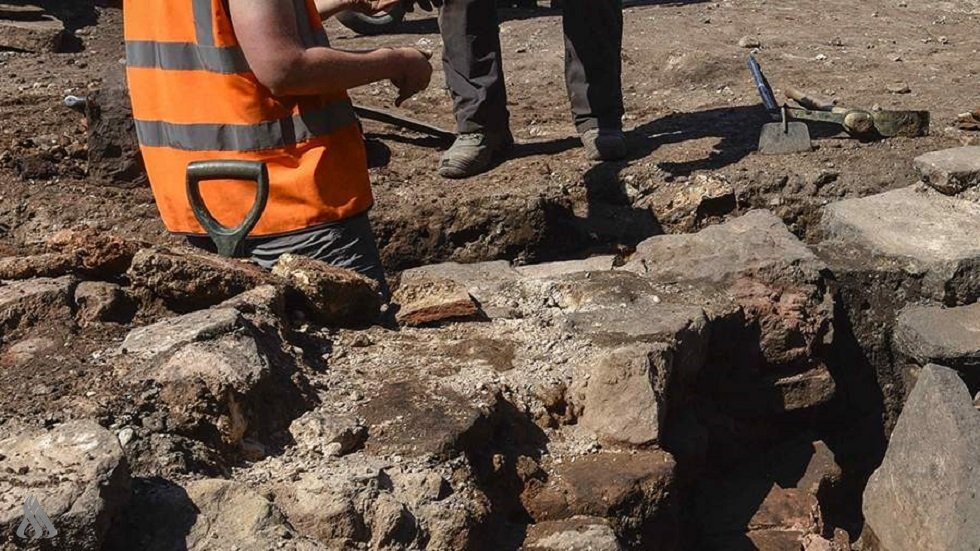
Swedish archaeologists have uncovered the long-lost city of Nya Lödöse—founded in the late 15th century and abandoned in 1624—beneath an industrial district in modern Gothenburg.
According to the Archaeological Survey of Sweden (Arkeologerna), recent excavations have revealed the southern portion of the settlement, including an earthen rampart, a moat, a street bordered by house foundations, and the city’s fortified southern gate.
Researchers report that the first dwellings in Nya Lödöse appeared in the late 1400s. The town was initially abandoned in 1547, when its inhabitants were relocated to the new settlement of Ålesborg. Several decades later it was repopulated, and its defensive structures were reinforced.
The city’s main street—which led to the Sifon River—was lined not only with homes but also with areas of cultivated farmland. Pottery, animal bones, coins, glass, wooden objects, and tools recovered during the excavation have allowed archaeologists to reconstruct a vivid picture of daily life. Despite its fortifications, evidence suggests that living conditions were extremely harsh.
Extensive excavations carried out in 2022 and 2023 have revealed rare architectural features that shed new light on Sweden’s early urban development.
Gothenburg, now Sweden’s second-largest city, continues to yield hidden layers of its past as archaeologists gradually unearth the centuries of history beneath its streets.