اكتشاف جسر أثري يعود إلى حضارة وادي الرافدين في مدينة "لارسا"
Discovery of ancient bridge dating back to Mesopotamian civilization in Larsa
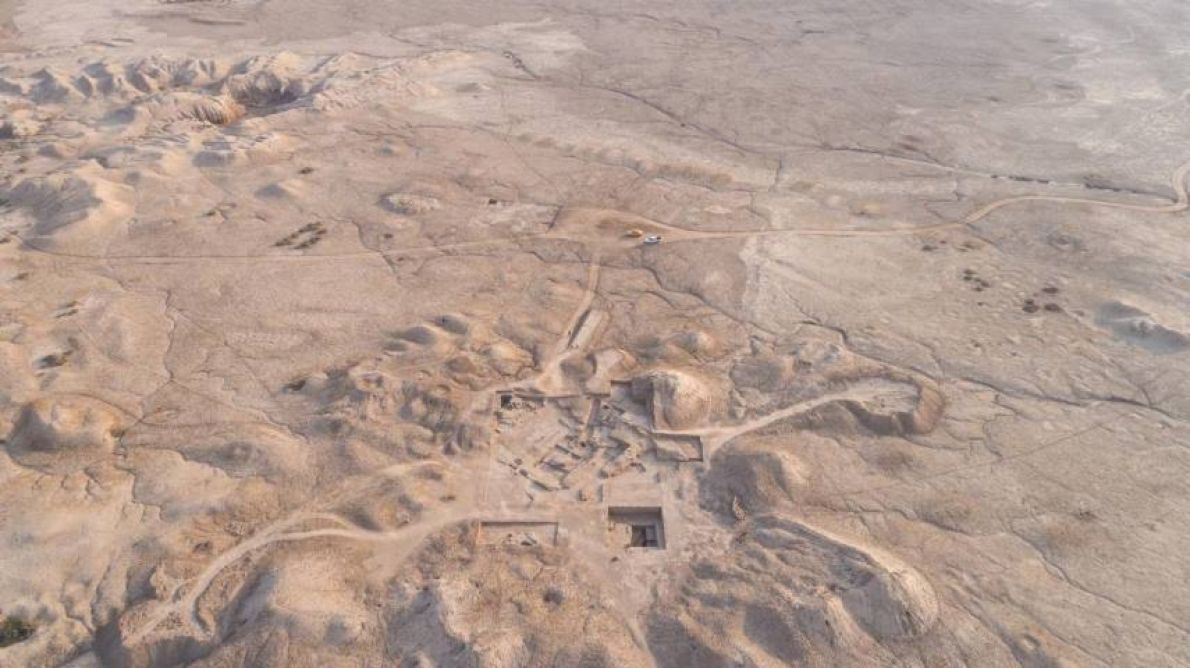
On Sunday, Shamil Al-Rumaidh, Director of Antiquities and Heritage in Dhi Qar Governorate, revealed details of the discovery of an ancient bridge in the historic city of Larsa, also known as Tell Al-Sankarah. He explained that archaeological excavations have uncovered approximately half of the structure, while the remaining section requires further excavation in upcoming seasons.
Located in northern Dhi Qar Governorate, Larsa was one of the prominent cities of ancient Mesopotamia. Among its most notable kings was Sin-iddinam, during whose reign the city witnessed extensive construction projects, including several temples, most notably those dedicated to Tammuz and Ishtar, as well as the Seleucid Palace.
The city flourished following the fall of the Third Dynasty of Ur. Archaeological excavations at the site began in 1950 under a French archaeological mission, which contributed to uncovering numerous historical landmarks and artifacts.
Al-Rumaidh stated that excavations resumed after 2003 under the supervision of a French mission headed by Dr. Regis. Between 2022 and 2026, successive excavation seasons yielded significant discoveries, including six city gates, a palace, and a large temple covering approximately seven hectares.
Regarding the newly discovered structure, Al-Rumaidh explained that the bridge, known as the Sin-iddinam Bridge, crosses the city's main irrigation canal and was constructed using baked bricks and mortar. He noted that only half of the bridge has been uncovered so far, with the remaining section expected to be revealed during future excavation seasons.
He added that the French mission has uncovered numerous archaeological artifacts throughout its work, with the current excavation season focusing primarily on the bridge and the temple. Although no archaeological objects were found inside the irrigation canal where the bridge is located, excavations at the palace yielded clay tablets, pottery jars, and statues, with approximately 15 artifacts discovered.
Al-Rumaidh also revealed that a clay tablet documenting the story of the bridge had been discovered, representing an important addition to researchers' understanding of the structure's history and function within the ancient city.
He emphasized that the discovery is significant for the study of Mesopotamian civilization, particularly the engineering and urban planning practices of the Sumerians, who developed sophisticated systems of bridges and irrigation canals. He explained that uncovering such a structure provides valuable insight into the urban organization of ancient cities and the engineering methods used to connect their different sections.
آخر ما تم نشره