ألف عام في وجه العواصف: الحوزة بين الغُزاة والسلاطين والاحتلال البريطاني
Al-Tar Caves: Rock-hewn structures harboring the secrets of civilizations in the Karbala desert
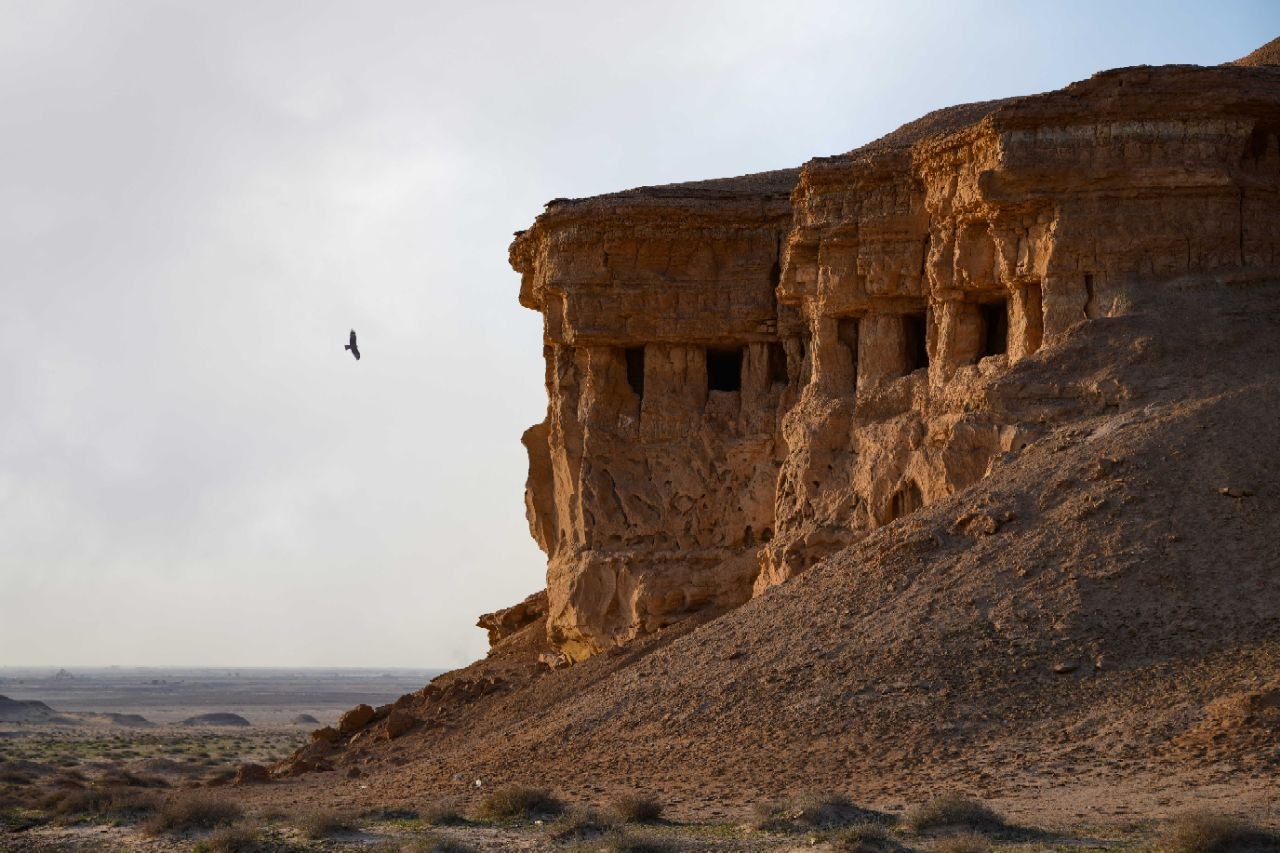
Along the edge of the Western Desert in Karbala Governorate lies one of Iraq’s most enigmatic archaeological sites: the Al-Tar Caves. Silent witnesses to successive civilizations, these rock-hewn structures were used over the centuries as dwellings, burial sites, shelters, and places of refuge. The archaeological complex extends along the rocky escarpment known as “Tar Al-Sayyid,” forming a distinctive geographical belt between Lake Razzaza and the historic Al-Ukhaidir Fortress. Hundreds of man-made chambers and caves are scattered throughout the area.
The significance of the Al-Tar Caves lies not simply in their unusual appearance, but in the evidence of deliberate and sophisticated engineering used to carve them into the surrounding limestone. The structures are generally attributed to the Parthian period, dating from approximately the 3rd century BCE to the 3rd century CE. Archaeological investigations launched by a Japanese mission in the 1970s uncovered remarkable architectural features, including more than 400 chambers carved into the limestone strata. Many contain square or rectangular openings leading to interior spaces, while some are interconnected by narrow tunnels and passages cut through the rock.
The caves appear to have served a variety of purposes over the centuries. Archaeological evidence indicates that some were used as communal and family burial sites, with the region’s arid climate contributing to the preservation of human remains. Others may have functioned as fortified shelters for soldiers and fighters stationed along the desert frontier. The site also appears to have played a role in the movement of people and goods, serving as a stopping point for herders and caravans traveling along historic routes connecting Mesopotamia with the Arabian Peninsula and the Levant.
Excavations have also uncovered a range of artifacts that shed light on the region’s connections with distant lands. Among the most notable discoveries are colorful wool and silk textiles that, according to analyses, originated in the Far East and reached the region through networks associated with the Silk Road. Pottery, oil lamps, and other everyday objects have further contributed to understanding how the caves and their surrounding settlements were used.
Despite their considerable historical and cultural significance, the Al-Tar Caves remain in need of greater attention and protection. Specialists have called for increased documentation, conservation, and investment to safeguard the site from natural erosion and neglect. With appropriate preservation and development, the caves could become a significant archaeological and cultural destination, offering visitors a rare glimpse into the civilizations that once inhabited Iraq’s desert landscapes.
Abbas Al-Taee