Secretary-General of the Imam Hussain Holy Shrine: Forum of Holy Shrine Secretaries-General serves as a beacon for reform and community service
Houston museum showcases centuries of Quranic art in landmark exhibition
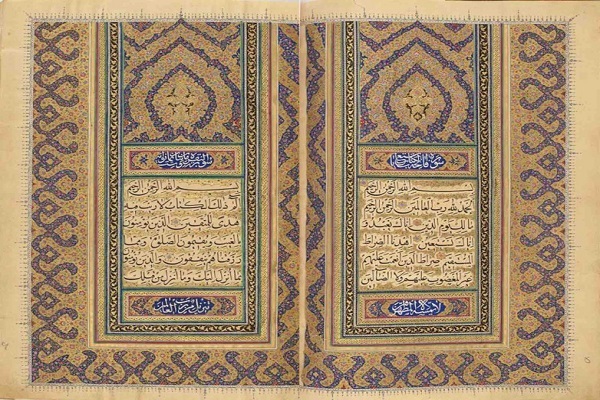
The Museum of Fine Arts in Houston, Texas, is currently presenting a major exhibition featuring rare and exquisite Quran manuscripts from across the Islamic world. Titled “Sea of Ink, Forest of Pens: The Art of the Quran in the Hossein Afshar Collection,” the exhibition will be on view through June 28, 2026.
This special installation highlights over a dozen masterworks created between the 7th and 19th centuries, offering a compelling exploration of the evolution and artistry of Quranic manuscript production over more than 1,200 years.
Among the exhibition’s highlights are:
A mid-7th century folio from one of the earliest surviving copies of the Quran, written in Hijazi script on parchment. Originating from what is now Saudi Arabia, only fragments and individual pages of this historic manuscript remain.
A lavishly illuminated Quran from Iran, dated AH 1260 / 1844–45, signed by the renowned calligrapher Mir ʿAbd Al-Karim Muhammad Sadiq Al-Husayni Al-Yazdi. This piece exemplifies the refinement of Persian manuscript traditions.
Pouran Jinchi’s Tajweed Red 2 (2009), a contemporary work that reimagines the Quran’s Tajweed (rules of pronunciation and recitation). Her ink-on-paper piece shifts the viewer's focus from literal meaning to the sound, rhythm, and performative nature of Quranic recitation.
Haji Noor Deen’s Ayat Al-Kursi Scroll (2015), a stunning blend of Islamic and Chinese calligraphic traditions. Executed in Sini script using both reed pen and brush techniques, the scroll features the revered Throne Verse (Ayat Al-Kursi), which is widely recited and believed to offer spiritual protection.
Located in Houston’s Museum District, the Museum of Fine Arts, Houston, houses a permanent collection of nearly 80,000 works spanning over 5,000 years and six continents. It is the second-largest art museum in the Americas by gallery space.
This exhibition offers visitors a rare opportunity to experience the artistic and spiritual richness of Quranic calligraphy across cultures and centuries, bridging the past with contemporary interpretations of sacred text.