وفدٌ من الطلبة الصينيين يزور مركز الإمام الحسين الثقافي في إسلام آباد
Scientists revive microscopic predator frozen in Siberia for 40,000 years
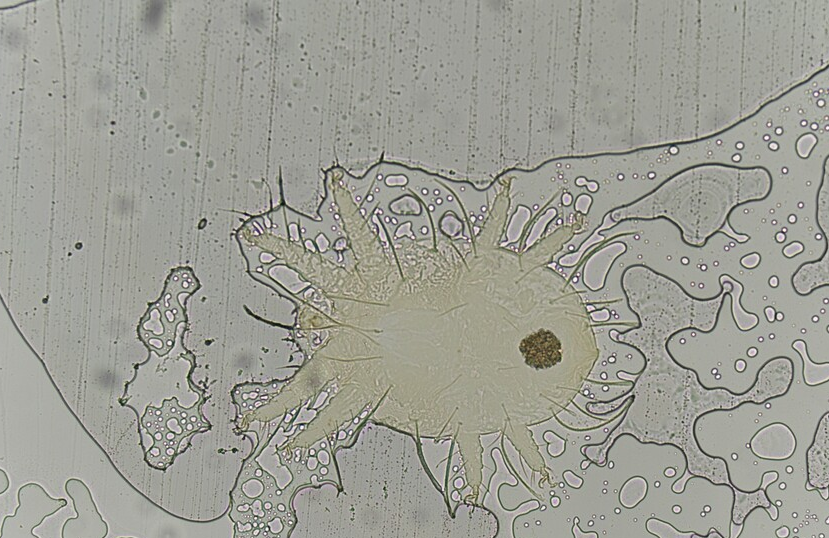
Russian scientists have successfully revived a microscopic predatory organism that remained buried in Siberian permafrost for nearly 40,000 years—dating back to the era when woolly mammoths still roamed the Earth.
The tiny creature was discovered alive about nine meters beneath the frozen ground in the Yamalo-Nenets region of the Russian Arctic.
Researchers from Tyumen State University named the organism Acanthocystis yamallongha, meaning “spirit of the edge of the earth.”
The microorganism is covered with delicate scales and needle-like spines, each thinner than one-thousandth of a millimeter. It belongs to a group of single-celled predators known as centrohelid heliozoans, which are recognized for their spines and tentacle-like structures.
After extracting the organism from ancient sediment, scientists were able to revive and maintain it in laboratory conditions. Researchers noted that its feeding behavior differs from that of its modern relatives, leading scientist German Suzoniov to describe it as a true “living fossil.”
What surprised researchers most was the organism’s ability to survive in a completely dormant state for tens of thousands of years. Suzoniov said he had never previously worked with samples of such age and expected little microbial diversity, making the discovery of living protozoa particularly unexpected.
Scientists believe the organism survived through a process known as cryptobiosis—a near-death dormant state in which a protective silica shell forms around the organism while its metabolism slows almost entirely to a halt.
The discovery is considered highly significant because it suggests that microscopic life forms may be capable of surviving far longer than previously thought. Researchers also say the revived organism represents a previously unknown evolutionary lineage.
Scientists emphasized that the microorganism poses no threat to humans. According to Suzoniov, it is neither parasitic nor disease-causing.
Researchers added that Siberian permafrost acts as a vast natural freezer, preserving ancient organisms for thousands of years. Covering nearly a quarter of the Northern Hemisphere’s landmass, the frozen soil has previously yielded numerous ancient bacteria and microorganisms.