العتبة الحسينية تكشف عن توجهات لتصنيع علاجات متقدمة في العراق.. بينها مشتقات البلازما والعلاج الشخصي لمرضى السرطان
Third-century AH Kufic Quran manuscript pages on display at Mecca museum
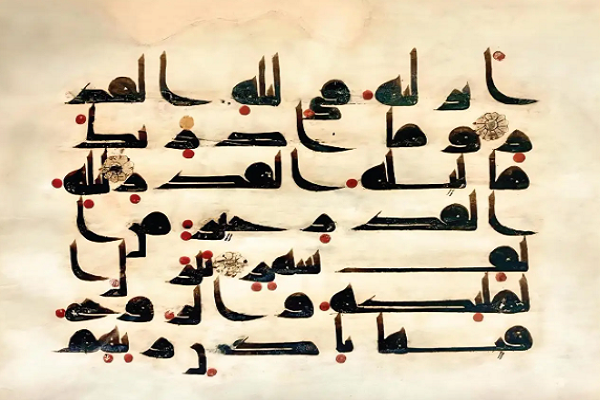
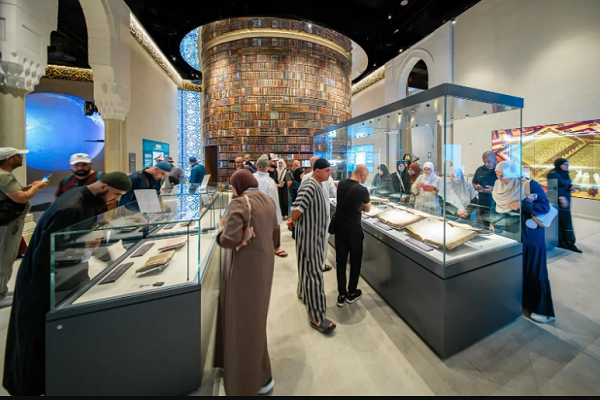
Two pages from an ancient Quranic manuscript written in Kufic script and dating back to the third century AH (ninth century AD) are on display at the Holy Quran Museum in the Hira Cultural District in Mecca.
The two pages offer a valuable example of early Quranic calligraphy, showcasing the artistic and stylistic features of manuscripts from that period.
Each page contains seven lines written in dark brown ink, with verse markers in gold. Their layout reflects the meticulous attention to visual composition in early Quranic manuscripts and the artistic techniques used to distinguish verses.
The manuscript features Kufic script with a slight rightward slant in the letters ‘alif and lam’, as well as the absence of diacritical dots. These characteristics illustrate early forms of Quranic writing and offer insight into the evolution of Arabic calligraphy and the methods used to preserve and document the Quranic text.
The displayed pages provide visitors and researchers with an opportunity to appreciate the distinctive aesthetics of Kufic script and the scholarly and artistic efforts devoted to serving the Holy Quran throughout the centuries.
The Holy Quran Museum is a specialized cultural landmark dedicated to exploring the history of the Holy Quran and its sciences. Through its manuscript collections and interactive exhibits, the museum showcases the various stages of Quranic transcription, compilation, and reproduction throughout history, offering visitors a deeper understanding of the development of Quranic calligraphy and the beauty of Arabic script.
المرفقات