الشيخ الكربلائي: جرائم القاعدة وداعش سباق مع الزمن
Sheikh Al-Karbalaey: Documenting Al-Qaeda and ISIS Crimes is a race against time
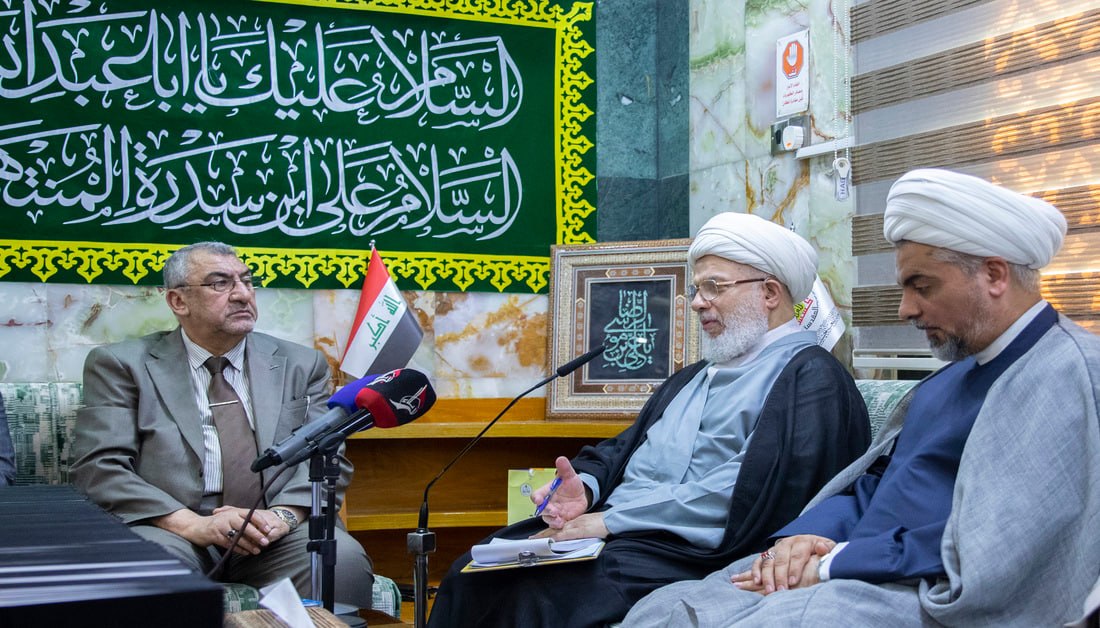
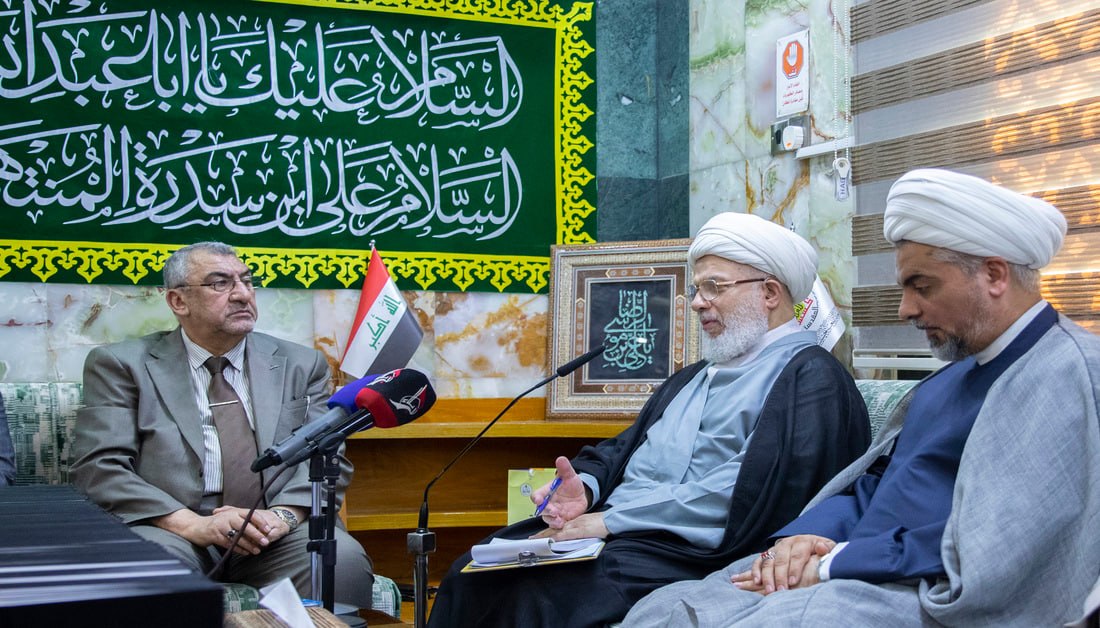
Sheikh Abdul-Mahdi Al-Karbalaey, representative of the Supreme Religious Authority, emphasized that documenting crimes and events linked to terrorism has become essential to protect the national memory from distortion. He stressed the importance of utilizing surviving physical evidence and traces from the field to reveal the truth and clarify the consequences of extremist ideologies and methods.
These remarks were made as he received the first copy of the encyclopedia documenting Al-Qaeda and ISIS terrorism in Iraq—a project prepared by the Imam Hussain Holy Shrine with the participation of over 100 scholars and experts, following years of research and documentation work.
Al-Karbalaey noted that the encyclopedia’s significance lies in preserving facts and evidence against falsification or distortion. He pointed out that documenting these events is currently a race against time, particularly while physical traces and evidence still exist that can be relied upon to reconstruct an accurate picture of what transpired.
He explained that documenting field evidence and events provides material that aids in understanding the nature of the ideologies and methods that led to these crimes, independent of narratives or images that might otherwise be presented in a manner contrary to the facts.
He further emphasized that the project is not limited to merely recording crimes; it also seeks to honor the individuals and entities that contributed to protecting Iraq, the faith, and society. It aims to document the stances and roles of scholars and heroes, ensuring their preservation within the historical record of events. He explained that the encyclopedia documents some of the crimes and violations committed by Al-Qaeda and ISIS against the Iraqi people. It records the stances and heroic stands witnessed in various regions—including the events in Amerli—and documents the violations inflicted upon diverse segments of society.
He called for moving beyond the initial stage of compiling documentary material to a broader phase of dissemination. This involves conveying the content to government institutions as well as regional and international organizations—particularly those concerned with human rights, documentation, and culture—by producing accurate translations and specialized summaries of the encyclopedia.
He also emphasized the importance of diversifying the methods used to convey these facts to the public, rather than limiting them to books and academic studies. He proposed utilizing literature, storytelling, novels, theater, and drama alongside academic documentation, thereby enabling new generations to learn about the documented events and the impact of the crimes Iraq has endured.
Al-Karbalaey commended the efforts of the Bayyinah Center for Intellectual and Cultural Security in preserving national memory. He urged the development of a comprehensive plan to translate the encyclopedia, share its content with international and regional institutions, and expand the channels for disseminating the information and evidence it contains.
The encyclopedia documenting the terrorism of Al-Qaeda and ISIS in Iraq was completed after more than five years of work. Comprising 50 volumes organized into five thematic areas, it is part of a project by the Bayyinah Center for Intellectual and Cultural Security—affiliated with the Imam Hussain Holy Shrine—to document events, crimes, and consequences associated with terrorism in Iraq.